

Flatten a surface
Move the brush region toward a plane. The illustrated stroke flattens the top of a bump while preserving the outside patch.
Before you start
Open Sculpting and choose an area with enough vertices to change shape. Flatten works relative to the local brush region, not a chosen world-axis plane.
Use the operation
Reduce local bumps and bring a patch toward a common plane.
- Choose Flatten in the brush selector.
- Use a brush large enough to cover the bump and part of its surrounding surface, with a low intensity.
- Make short passes and inspect from the side. Stop before a desired ridge or curved region loses its shape.
Controls and choices
| Controls | What changes |
|---|---|
| Local plane | The plane is estimated from the affected surface and its normals. Changing brush position or size can change that reference. |
| Intensity | Higher intensity moves the region toward the local plane more quickly. Low intensity leaves more room to judge each pass. |
| Precise alignment | Use mesh alignment or numeric transforms when vertices must lie on an exact axis plane. Flatten is a sculpting adjustment. |
See what changes
Before
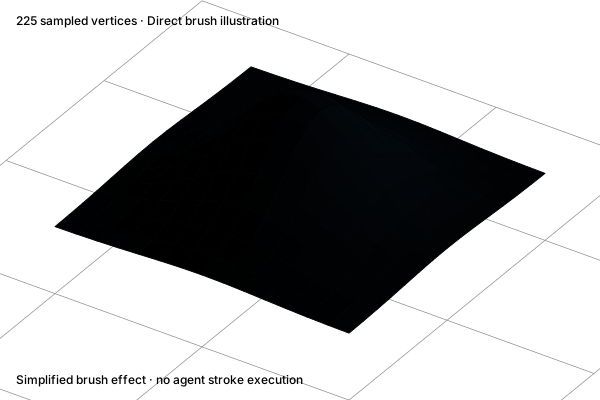
A rounded bump
After
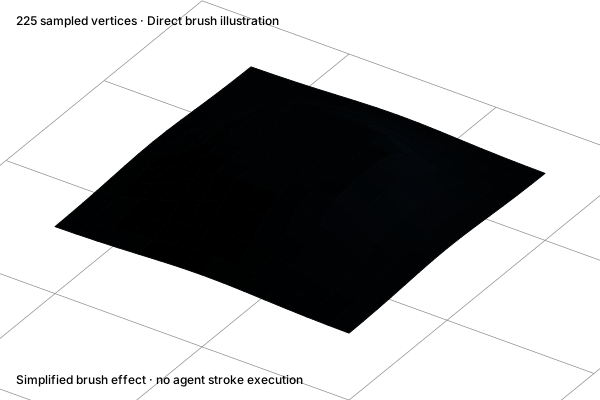
A flattened local patch
Check the result
Check that unevenness decreased without flattening intentional curvature. Compare the silhouette and undo if the patch becomes too broad or flat.
Practice in Show3D
Open the editor and follow the steps with your own scene.