

Boolean union
Combine the volume occupied by either solid and remove interior surfaces. This differs from grouping or joining object records.
Before you start
Select two or more editable mesh objects in Object Mode. Apply active modifiers before using the Boolean tool, and use clean closed volumes for a dependable solid result.
Use the operation
Combine intersecting volumes into one Boolean result.
- Position the meshes so their overlap matches the intended combined shape. Keep a duplicate if you will need the original operands later.
- Select the meshes, open Boolean in the modeling sidebar, and choose Union.
- Inspect the new surface around intersections and check the resulting material.
Controls and choices
| Controls | What changes |
|---|---|
| Union versus Join | Union computes a combined volume. Join places geometry in one object without removing internal intersections. |
| Overlap | A small genuine overlap is easier to reason about than faces that only touch exactly. Disconnected inputs may remain separate islands. |
| Material | The Boolean result uses a material derived from the first operand. Do not assume every input material assignment is preserved. |
See what changes
Before
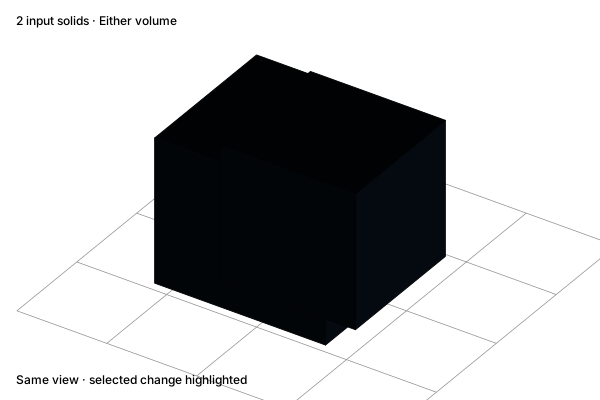
Two overlapping solids
After
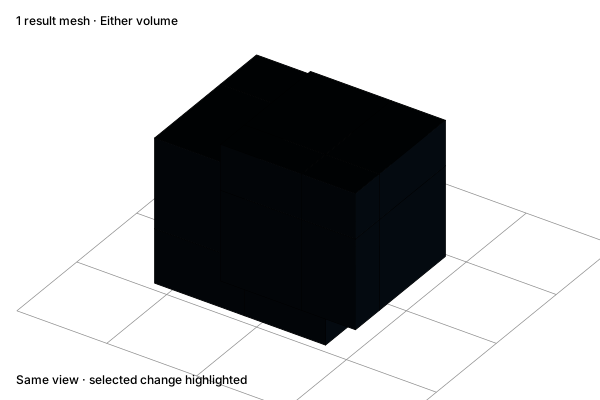
One combined volume
Check the result
Check for an intact exterior and unintended seams. A successful operation is not a guarantee of animation-ready edge flow; inspect topology before further deformation.
Practice in Show3D
Open the editor and follow the steps with your own scene.