

Join meshes
Combine mesh objects into one object. Separate islands can remain; joining does not remove overlapping volume like a boolean union.
Before you start
Select at least two supported mesh objects in object mode. Resolve active modifiers if Join Objects is unavailable. Choose the intended active object because it provides the target object context for the join.
Use the operation
Combine separate mesh objects so they can be selected and edited as one.
- Inspect the selected meshes and the active object before joining.
- Choose Join Objects in the object context menu. The menu shows the platform's modifier key plus J.
- Inspect the combined object in the scene tree and enter mesh edit mode to inspect its parts.
- Check material assignments and the boundaries between the original objects before making further edits.
Controls and choices
| Controls | What changes |
|---|---|
| Active mesh | Determines the target context; source geometry is transformed into the joined object's coordinates. |
| Source selection | Only the chosen supported meshes participate. Locked or incompatible objects can prevent the operation. |
| Material slots | Source face materials are mapped into the joined object's material slots; inspect seams after joining. |
See what changes
Before
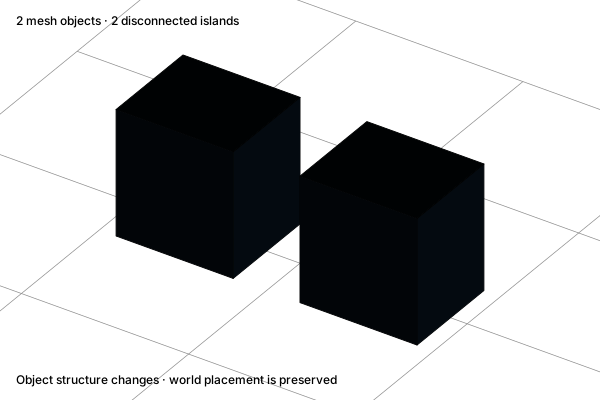
Two mesh objects
After
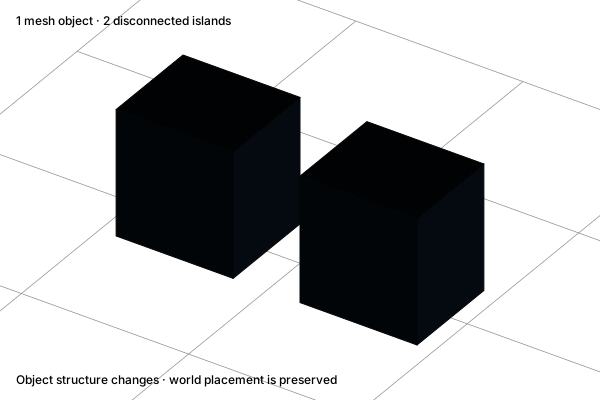
One mesh object
Check the result
One object can still contain disconnected islands and overlapping surfaces. Join does not weld adjacent vertices or compute a solid union. Use Merge by Distance for a deliberately matching seam, or Boolean Union when the desired result is a combined volume.
Practice in Show3D
Open the editor and follow the steps with your own scene.