

Duplicate
Make a separate copy and move it beside the source. Duplicating does not connect their topology.
Before you start
Select the object or objects in object mode. Duplication makes another object; it does not join the two meshes or create an automatic repetition rule.
Use the operation
Make a copy that you can position as a separate part.
- Open the selected objects' context menu and choose Duplicate. The menu also shows the platform's modifier-key shortcut.
- Identify the selected copies in the scene list, then move them away from the source so the results are distinguishable.
- Give repeated parts useful names before changing their transforms or geometry.
- Inspect both the source and copy after any material changes; duplicated materials can retain shared resources.
Controls and choices
| Controls | What changes |
|---|---|
| Selection | Determines which objects are copied. A selected group may include a hierarchy of children. |
| Move / Rotate / Scale | Positions the copies after duplication. Overlapping copies can initially look like one object. |
| Object names | Make source and destination parts distinguishable in the scene tree and in Codex requests. |
See what changes
Before
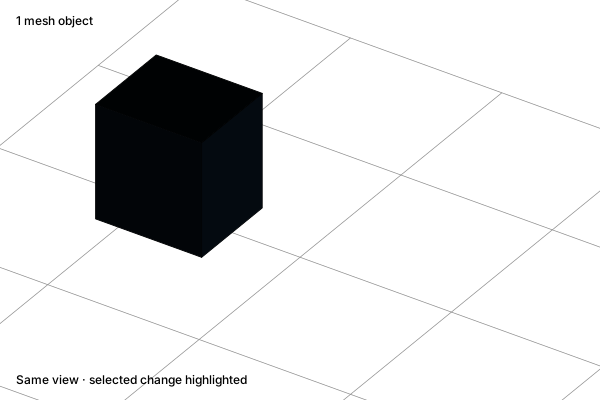
One object
After
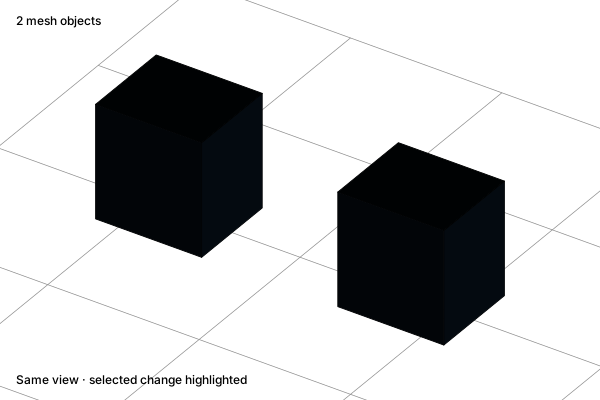
Two independent objects
Check the result
Confirm the expected number of objects in the scene tree. If a copy appears to be missing, move the selection or inspect overlapping objects. Use Group for an assembly or Join Objects for one mesh object; those are separate decisions.
Practice in Show3D
Open the editor and follow the steps with your own scene.