

Scale
Change the object’s width while preserving its height. This example uses an axis constraint and a fixed pivot.
Before you start
Select the object to resize. Decide whether to preserve all proportions or change only one dimension. Object scaling uses a pivot and remains separate from the underlying mesh coordinates until applied.
Use the operation
Change a part's size or aspect ratio deliberately.
- Choose Scale in Transform Mode; the displayed shortcut is R when the workspace has focus.
- Use an axis handle to change one direction, or use the linked Scale fields in object properties for uniform values.
- Unlock Scale in properties before entering different X, Y, and Z values. A value of 1 retains the mesh's size on that axis; 2 doubles it.
- Check both the silhouette and the pivot-side placement. Apply Scale only when you want to bake the result into the mesh.
Controls and choices
| Controls | What changes |
|---|---|
| Scale lock | The current properties panel writes the same entered value to all three axes when locked. Unlock it for different axis values. |
| Axis values | Non-uniform values change proportions. Zero collapses a dimension; negative values reverse an axis. |
| Apply Scale | Bakes scale into geometry and resets the scale fields; it does not resize the visible result again. |
See what changes
Before
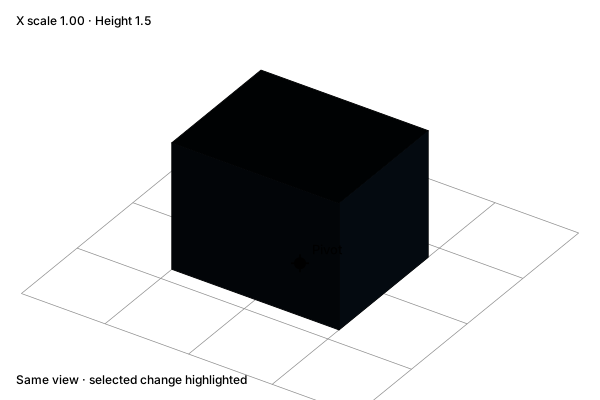
Original proportions
After
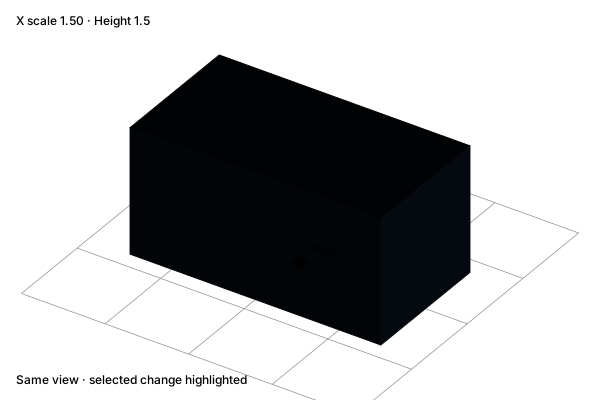
Scaled on one axis
Check the result
Check gaps and thickness after non-uniform scaling. Avoid zero scale when the mesh must remain editable as a volume. If later operations behave differently by axis, inspect unapplied scale and use Apply Scale when appropriate.
Practice in Show3D
Open the editor and follow the steps with your own scene.